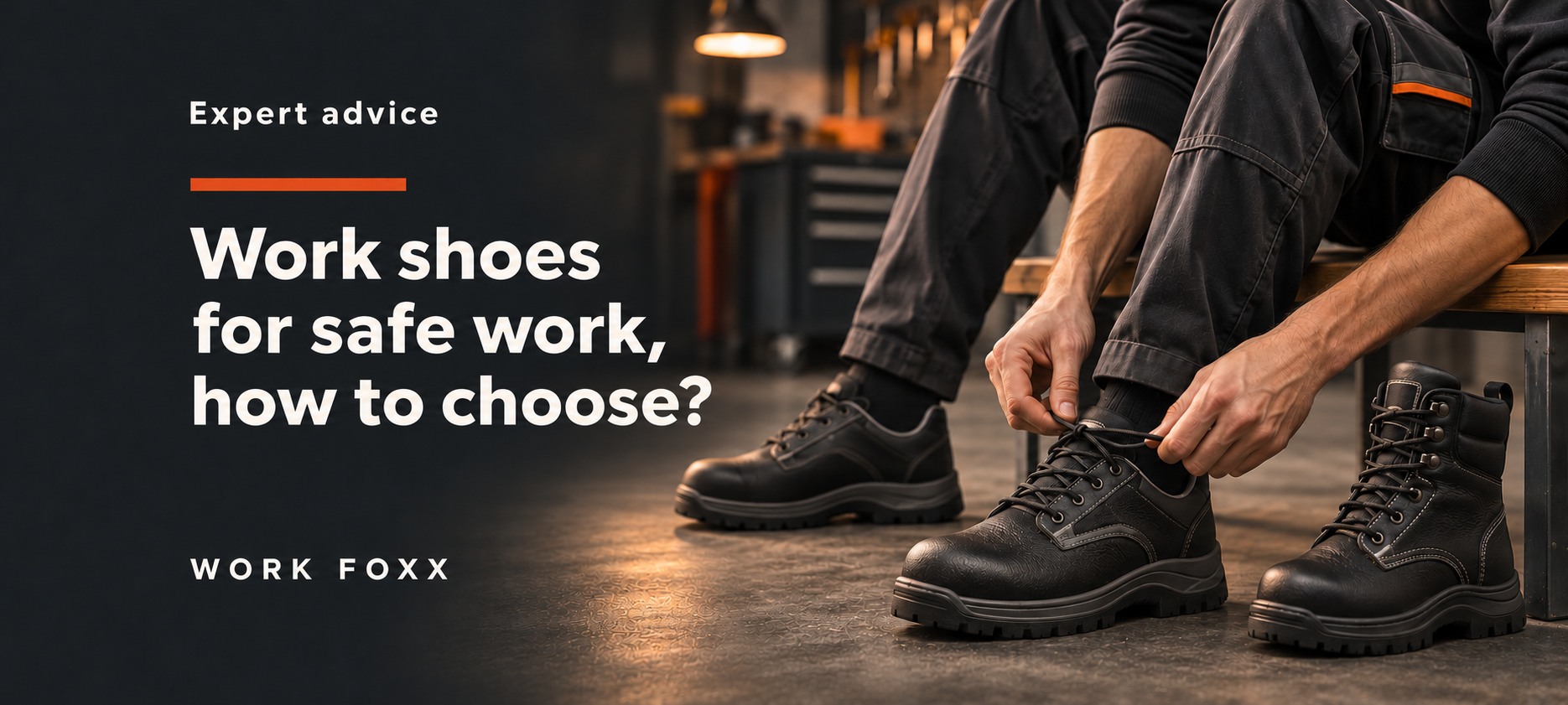
How to choose work shoes for safe work?
Choosing the right work shoes is essential for your comfort, safety and productivity. In many workplaces, shoes are essential as personal protective equipment (PPE). They protect workers’ feet from a variety of hazards, including slips, trips, falls, punctures and splinters. However, not all safety shoes are created equal, so choosing the right pair for your workplace is crucial. Here are some tips for choosing the best shoes that meet safety standards and protect your feet.
Assess the hazards in your workplace for shoes
The first step in choosing the right shoes is to assess the hazards in your workplace. Different industries and job roles pose different risks to your feet. Depending on the risks and areas of use, we choose either high-top shoes or low-top shoes.
For example, construction workers may face hazards from falling objects, sharp objects, and heavy equipment, while healthcare workers need protection from spills, slips, and punctures. By identifying potential hazards, you can select shoes with the appropriate features and safety standards to reduce risks and protect your workers’ feet.
Follow safety standards for work shoes
Shoes must meet specific safety standards to ensure their effectiveness. The American National Standards Institute (ANSI) and the European Committee for Standardization (CE) set the most common safety standards for safety shoes. The ANSI standard is ASTM F2413, while the CE standard is EN ISO 20345 for work shoes with a protective toe cap and EN ISO 20347 for work shoes without a protective toe cap. It is essential to find work shoes that meet these standards to ensure you get the proper protection you need.
Choose the right type of shoes
There are several types of shoes available, each with different features and levels of protection. The most popular type of work boot is the steel-toed boot, which provides protection against slip and impact hazards. Composite-toed boots are lightweight and offer similar protection to steel-toed boots, but with non-metallic components.
Metatarsal shoes provide additional protection for the metatarsal bones in the foot. Electrical Hazard (EH) shoes protect against electrical hazards and have non-conductive soles. The type of safety shoes you choose should depend on the potential hazards in your workplace and the tasks your workers perform.
Find comfortable work shoes
Shoes can be uncomfortable and cause foot pain if they don’t fit properly. Look for work shoes with comfort features like cushioned insoles, breathable uppers, and padded collars.
Make sure your shoes fit well and are not too tight or loose. Some work shoes come in different widths and sizes to accommodate different foot shapes. Choosing comfortable work shoes can help prevent foot pain and discomfort that can affect workers’ productivity and well-being.
Check the durability of work shoes
Shoes are an investment, so you want them to last as long as possible. Look for shoes made from high-quality materials that can withstand the wear and tear of the workplace. Check the construction and stitching to make sure the shoes are durable and can withstand the demands of your job. By choosing durable work shoes, you can reduce replacement costs and ensure that your workers’ feet are protected for longer.
The right work shoes are essential to protecting your feet in the workplace. By assessing hazards, following safety standards, choosing the right type of safety footwear, looking for comfort, and checking for durability when choosing safety footwear, you can ensure that you choose the best shoes for your job and stay safe on the job. Remember, investing in quality work shoes is essential not only for the well-being of your workers, but also for your bottom line.
Ensure the protection and comfort of your employees. Visit our website or contact our professional staff for more information.
We invite you to check out our range of shoes from the brands Lacuna , Base , Coverguard , VM Footwear and Bata Industrials .
