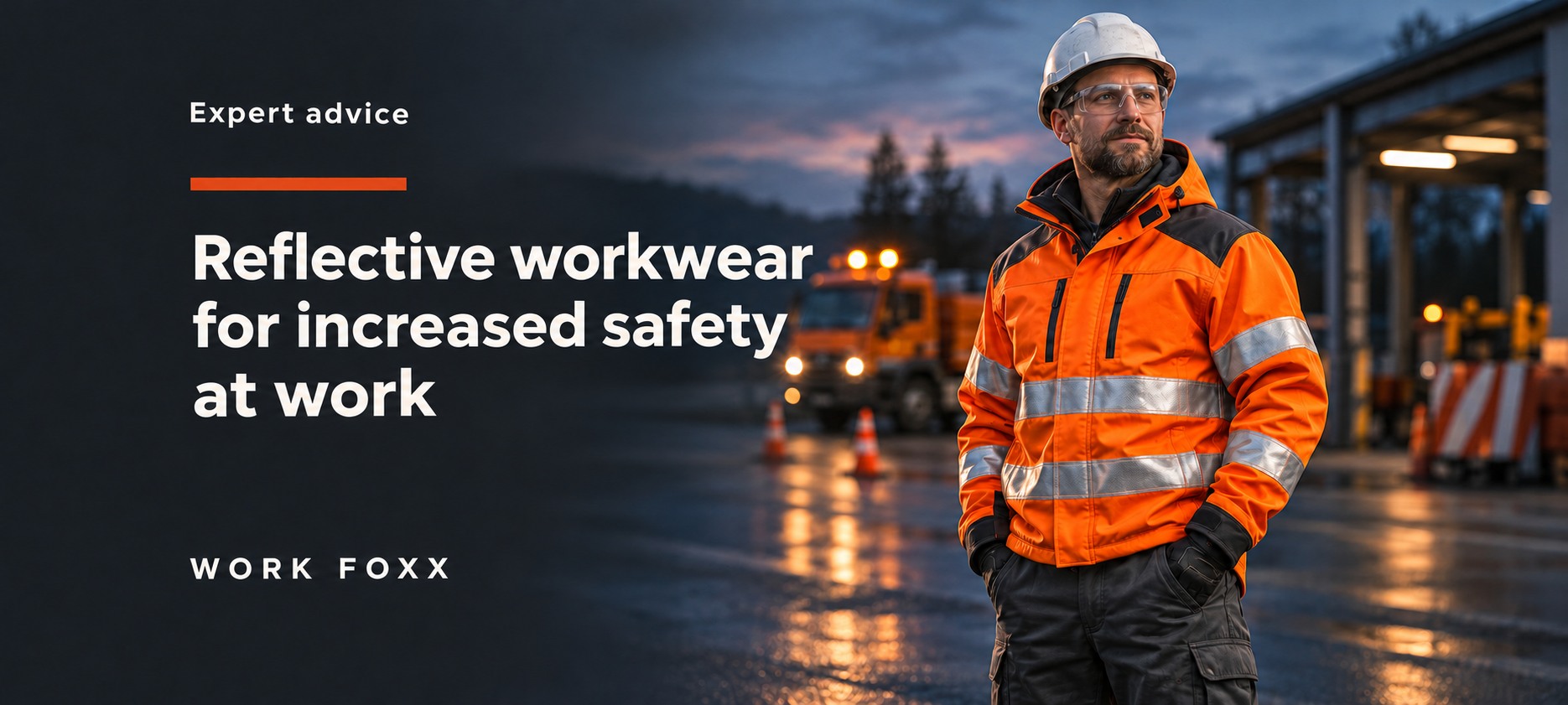
Reflective workwear for increased safety at work
Why is reflective workwear crucial for safety at work?
Reflective workwear is a key piece of safety equipment in many industries, especially those where workers are exposed to hazards and poor visibility. This clothing is not just an accessory, but a mandatory piece of equipment that allows workers to be seen in difficult conditions, reduces the risk of accidents and contributes to a safe working environment. Below, we will explore the importance of reflective clothing, how it works, what standards are associated with it and why it should be included in workers’ everyday equipment.
Safety at work: why is reflective clothing necessary?
Safety is a top priority in any job, especially when it comes to jobs where workers are often in the vicinity of moving vehicles or machinery. In such situations, reflective workwear is what ensures that workers are clearly visible, significantly reducing the risk of accidents.
Increased visibility and reduced risk of accidents
The main advantage of reflective clothing is that it allows workers to be seen by vehicles or machinery at a sufficient distance, allowing timely action. Statistics show that the risk of accidents on construction sites and in industrial areas is significantly lower when workers are properly equipped with reflective work clothing.
Safety when working at night and in poor light conditions
Night work, work in the early morning hours, or in bad weather conditions such as fog and rain are particularly dangerous. In these conditions, the lack of light can make workers less visible. Reflective workwear is designed to reflect light back to its source, increasing the worker’s visibility to others.
Who needs reflective workwear?
Reflective workwear is not only important for certain industries, but is essential wherever workers are exposed to hazards due to reduced visibility.
Construction and road works
In the construction industry and on road works, workers are constantly exposed to risks. Construction sites are often chaotic, with many vehicles and machines in motion, which increases the risk of accidents. Workwear with reflective strips ensures that workers are visible even in the busiest moments.
Logistics and warehousing
The logistics industry, where cargo moves quickly, is another area where reflective clothing is essential. Warehouses and loading docks can be dangerous, so workwear with reflective elements is important for employee safety.
Public sector and infrastructure maintenance
Public sectors such as utilities, road and rail infrastructure maintenance, and other outdoor workers also require the use of reflective clothing. This workwear allows workers to be more visible in traffic areas, ensuring greater safety.
Standards and regulations for reflective workwear
European standard EN ISO 20471
One of the most important standards for workwear is the European standard EN ISO 20471, which specifies requirements for reflective clothing for professional use. This standard covers specifications for the material, size and positioning of reflective tapes. Reflective workwear that meets this standard ensures sufficient visibility for both day and night use.
Different levels of visibility
EN ISO 20471 classifies reflective clothing into three categories based on the level of visibility it provides. The higher the category, the larger the area of reflective material, which means better visibility. It is important to choose the appropriate level of visibility for different working conditions, to ensure optimal protection for workers.
Benefits of using reflective workwear
This type of workwear offers a number of benefits that contribute to worker safety and efficiency. While the primary benefit is increased visibility, its impact is much broader.
Increasing productivity and self-confidence
When workers are well-equipped and know they are seen, they can work more confidently and therefore more productively. High-visibility workwear allows them to focus on their work without constantly worrying about their own safety.
Preventing eye fatigue
In jobs where visibility is limited, such as in mines or warehouses, the use of reflective clothing can reduce eye strain. Workers working in low light experience less strain because reflective work clothing allows them to better distinguish themselves from their colleagues in the workplace.
How to choose the right reflective workwear ?
Choosing the right workwear requires attention to a few key factors. It is important that the clothing fits the worker and meets safety standards.
Quality of materials and durability
When choosing reflective workwear, it is important that it is made of high-quality and durable materials. Workers who are exposed to demanding conditions on a daily basis need clothing that will withstand high loads and frequent washing, while maintaining its reflective properties.
Comfort and flexibility of reflective workwear
Workwear such as reflective shirts, reflective jackets and reflective trousers must be comfortable to wear. Since workers wear them for long periods of time, it is important that they fit their body and allow freedom of movement. Many reflective garments are made of materials that are breathable and elastic, which contributes to comfort while working.
Adaptability to different weather conditions
Some workwear is designed to work in all weather conditions. For example, reflective jackets for winter use are often wind and water resistant, ensuring that workers stay dry and warm even in inclement weather.
Safety at work with reflective workwear
Reflective workwear has a major impact on worker safety and contributes to reducing accidents. From industry to logistics and utilities, it plays a key role in improving visibility and protecting workers in every sector.
The importance of employee safety education about reflective workwear
Ensuring safety in the workplace is not just about equipment, but also about knowledge. Companies should invest in educating employees about the importance of workwear and how to properly use protective equipment. Such training increases safety awareness and encourages workers to use protective equipment regularly.
Tips for maintaining reflective workwear
In order for reflective workwear to retain its properties, it is important to maintain it properly. Proper washing and storage can significantly extend the life of the clothing and maintain its functionality.
Washing without aggressive chemicals
Reflective clothing is washed frequently, so it is recommended to use mild detergents and avoid bleach or fabric softeners, which can damage the reflective tapes. Workwear should be washed at a low temperature and air dried.
Reflective workwear – Storage in dark and dry places
Reflective properties can fade over time if clothing is exposed to direct sunlight. To maintain reflectivity in the long term, it is recommended to store workwear in dark, dry areas, which minimizes exposure to sunlight and moisture.
