

5 tips for proper maintenance of equipment for working at height


5 tips for proper maintenance of equipment for working at height
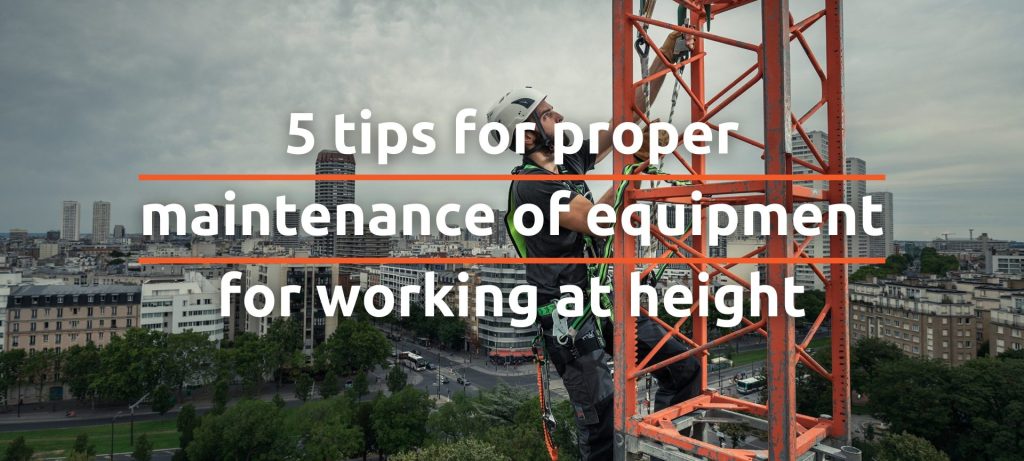
Working at height comes with a range of unique challenges and risks. From using lifting platforms to securing systems, it is important to understand the intricacies of the equipment you are using. Employers and safety managers need to have a comprehensive knowledge of best practices to keep everyone safe. According to the regulations on work at height, it is crucial that tasks at height are carefully planned, supervised and carried out by qualified workers. So how do you maintain equipment for working at height to ensure optimal safety? This comprehensive guide will introduce you to five invaluable tips for effectively maintaining your work at height equipment.
Use the right equipment
-
The importance of choosing the right equipment
Choosing the right equipment is the foundation of safety when working at height. The use of inadequate or defective equipment can cause not only accidents, but also violations guidelines for safe work at height.
Zato je bistveno, da veste, kaj in kdaj je treba uporabiti.
-
Inspection is key
A thorough inspection should be done before installing the equipment. Look for wear, corrosion and other signs of damage. According to industry experts, every piece of equipment should be inspected before use, yes hers is ensured good performance. Inconsistent inspections can lead to equipment failure, putting workers at great risk.
Calculate the potential fall distance
-
Understanding Fall Dynamics
The thought of falling is terrifying, but those who work at height must prepare for the possibility. Fall distance isn't just about how high you are, it's also about how deep you can fall and the impact you experience when you land. You could say that knowing your fall distance is the cornerstone of risk reduction.
-
The role of safety managers
The role of safety managers in calculating the potential fall distance is irreplaceable. They must insist that employees use restraint systems that prevent strong impacts. Impact when falling from a height of 10 meters and 50 meters is very different , so fastening systems must be designed to effectively mitigate these forces.
**Work Foxx advises: Please note that the information in this blog is for educational purposes and should not replace professional advice. Always consult a qualified security professional or other relevant professional for the most accurate and tailored advice. Stay tuned for more information and remember that safety never goes on vacation.
Additional security measures
-
Using a fence
Why are fences essential for safety?
Working at height is inevitably associated with the risk of falling, so a guardrail can literally save your life. The guardrails serve as a physical barrier to prevent you from falling over the edge. In accordance with according to industry guidelines, handrails are an essential safety measure when working at height and are highly recommended to avoid hazards.
Responsibility of decision makers
The duty to ensure safety is not only on the part of the worker, but decision-makers must also contribute their share. They must ensure that the construction site requires fences that meet all safety standards. Failure to follow this simple precaution can have serious consequences.
-
Choose the appropriate personal protective equipment
The role of personal protective equipment
One of the most important aspects of safety when working at height is the use of personal protective equipment (PPE). Personal protective equipment is your last line of defense against falls and potential injuries. Whether it's belts or helmets, he can choose the appropriate personal protective equipment significantly affects the outcome of the accident.
Inspection of personal protective equipment
Like other equipment for work at height, personal protective equipment must be inspected before use. Look for torn straps, weakened locking mechanisms and other signs of wear. Your life can depend on the reliability of your personal protective equipment, so never underestimate the importance of a thorough inspection.
-
Ensure correct use of lifting platforms
Why aerial lifts?
Aerial lifts are often used in tasks that require workers to reach great heights. They offer a stable platform and can be extremely effective, but they also come with a range of risks. To ensure safety, proper training is not only good practice, but also required by legislation.
Need for proper training
If you want your employees to work safely at height, they must be properly trained. Training is vital because it is too much room for error and confusion if a person tries to protect himself at height without proper knowledge. A well-designed training program should cover the operation, safety features and emergency procedures associated with aerial platforms.
-
Additional insights
Regulations on work at height
Every employer must know and follow the regulations on working at height.
Ti predpisi določajo zakonske zahteve za varno delo na višini in poudarjajo pomen načrtovanja, nadzora in kompetentnega izvajanja.
Record keeping
Keeping proper records of equipment inspections, employee training and incident reports can be a valuable asset for each organization. It not only ensures regulatory compliance, but also helps identify patterns that could indicate higher risk or an area for improvement.
Conclusion
Proper maintenance and safe use of work-at-height equipment is not just good practice – it is imperative. The lives of workers and the reputation of companies depend on these important aspects of workplace safety. From choosing the right equipment and calculating the fall distance to using railings and choosing the right personal protective equipment (PPE) - every step contributes to a safer work environment. Remember that security doesn't happen by accident; it requires careful planning, training and vigilance.
Key findings
- Use the right equipment: Before use, remember to check the equipment that is suitable for the specific task. As they point out industry experts , the review is an indispensable step.
- Calculate the potential fall distance : Safety managers must be careful in estimating the fall distance and ensuring that adequate restraint systems are in place to mitigate the impact .
- Fences are essential: This is the first line of physical defense against a fall: don't overlook the importance of safety rails. This simple addition can greatly increases security .
- Don't skimp on personal protective equipment: your personal protective equipment, from seat belts to helmets, is the last line of defense against accidents. Make sure you do you will choose and maintain them correctly .
- Proper training for aerial lifts : Employers must ensure that all operators are properly trained in the use of aerial lifts as required by law .
Last words
Safety must be the foundation of any activity that involves working at height. The importance of compliance on work at height from the year is priceless. In addition, keeping accurate records is not only good for ensuring compliance, it also serves as a valuable resource for continuous improvement .
Stay safe and thanks for reading!